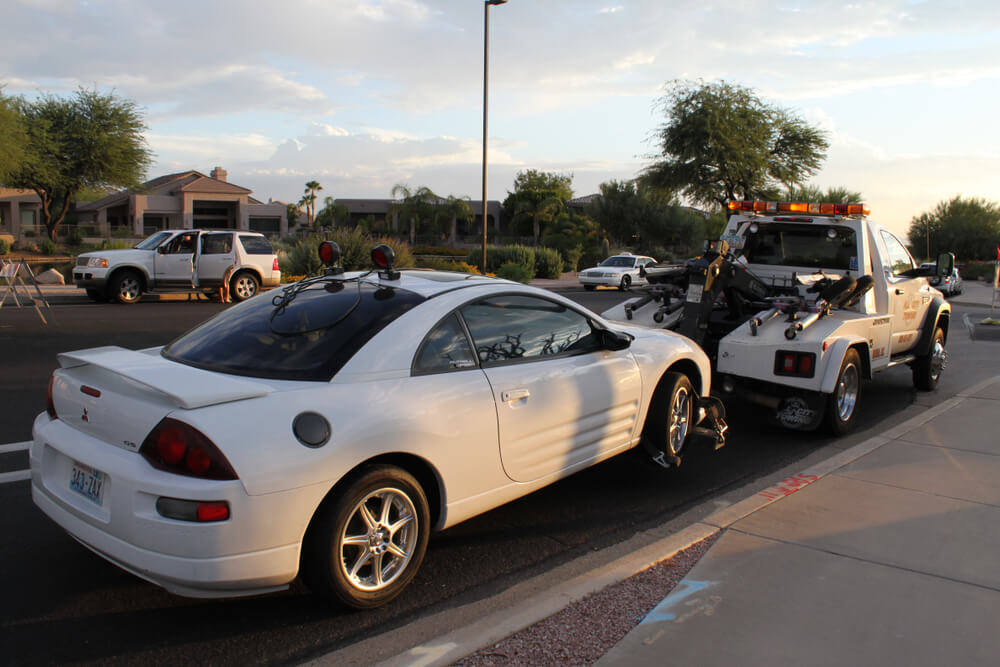
In Arizona, being convicted of certain offenses can result in having your vehicle impounded for 30 days. Vehicle impoundment means holding a vehicle in a storage lot or tow yard for a mandatory amount of time. It is important to know what to do if your vehicle gets impounded in Surprise Arizona, including how to get your car back.
If you would like to discuss options on your case and how we can provide legal help, contact The Law Offices of John Phebus Criminal and Personal Injury Lawyer today
In Arizona, it is possible to have your vehicle impounded for committing certain traffic offenses and moving violations. Impoundment is a vehicle hold that is required by state law with only some exemptions for early vehicle release. Arizona Revised Statute Section 28-3511 states that a peace officer has the right to remove and either immobilize or impound a vehicle for 30 days if he or she determines that the person driving the vehicle has committed a certain offense, such as:
Typically, a 30-day vehicle impoundment is reserved for serious moving violations, such as driving while intoxicated with a minor under the age of 15 in the vehicle or having multiple DUIs. In many cases, multiple factors or aggravating circumstances must be present to have a vehicle impounded.
Grounds for contesting a vehicle impoundment may include errors or specific circumstances that exempt the owner. Arizona law allows a post-impound hearing if the owner believes the impound was unjust. Valid grounds include:
Submit a hearing request within ten days of impoundment. According to the Phoenix Police Department, these hearings allow owners to challenge the impoundment and may lead to early release or reduced fees.
Yes, in some cases. Arizona does allow waivers or reductions for impound fees, especially when the vehicle was reported stolen or the registered owner can prove financial difficulty. Understanding how to get impound fees waived az can help individuals take the right steps early. Valid documentation can make a huge difference, and the outcome often depends on how and when you present your case.
Below, we break down common scenarios
If your vehicle was stolen before the impoundment, you may be exempt from certain charges, as long as you provide an official police report showing it was reported as stolen and you work with the authorities on the case. However, it’s worth noting that under Arizona law, the person driving the stolen vehicle at the time may still be held responsible for the fees.
As noted by the Arizona Legislature, an immobilizing or impounding agency must release a vehicle to its registered owner before the end of the impoundment period if the vehicle was reported stolen.
If you were incarcerated while your vehicle was impounded, bring in official proof—this could be a letter from your parole or probation officer, jail time records, or court documents. The more precise the timeline, the better your odds of reducing or eliminating those fees.
Suppose your car was declared a total loss by the insurance company. In that case, a settlement letter that includes your payout, the loss date, and information on who took possession of the vehicle may help reduce your debt.
In cities across Arizona, local programs sometimes help people who can’t afford impound fees. These programs aren’t always advertised, so contacting a city office, legal service provider, or even a nonprofit organization can be a smart move. This applies especially to those wondering again how to get impound fees waived az when financial options are limited.
If you can show a bill of sale that proves the vehicle changed ownership before it was abandoned, that documentation may be considered when requesting a fee waiver.
In the case of a trade-in or sale to a dealership, the purchase agreement or trade-in receipt can help demonstrate that you no longer had control of the vehicle when the infraction occurred.
Contact the department that issued the impound. Explain your case clearly, and be prepared with any supporting documentation.
Speak directly with the towing company. Let them know about your financial situation.
If the initial contact isn’t productive, request to speak with a supervisor or department head.
When a vehicle has been impounded due to a revoked or missing license, presenting documentation that confirms a valid license and reinstated driving privileges can help secure an early release.
In this case, you might still be responsible for retrieval fees but could be eligible for an early release under certain conditions. Arizona law allows the registered owner to recover the vehicle within 30 days if they can prove they were unaware the driver lacked a valid license or if the driver was a licensed and insured immediate family member. In these cases, the vehicle owner may need to submit:
This exemption can benefit owners who unknowingly allow an unlicensed driver to use their vehicle. Contact the impounding agency to determine the specific steps and documentation needed for early release.
Vehicle owners are generally permitted to retrieve personal items from an impounded vehicle, though procedures may vary by location. Under Arizona law, you may access certain personal belongings, like clothing, documents, or electronics, while the car is impounded. Nevertheless, impound facilities may restrict access to certain items, such as vehicle parts or tools. To retrieve belongings, you typically need to:
Always check with the specific impound lot, as procedures may vary by jurisdiction.
If your motor vehicle gets taken under Arizona’s 30-day impound law, you will receive a Notice of Impoundment. This document will contain all the information that you need to retrieve your vehicle at the end of the mandatory holding period, such as the storage company’s name and the location of the car. You will have the right to a hearing to attempt to get your vehicle out early. You must request this hearing within 10 days of the impound. Your impound hearing will be before a police officer from the department that impounded your vehicle, not a judge.
During your impound hearing, you or your Scottsdale criminal defense attorney can argue that you did not commit the charge(s) for which your vehicle was impounded. An attorney can help you gather and present evidence to support this claim. If successful, you will be able to get your car out of a mandatory hold early. Unfortunately, you will still be responsible for paying all fees and charges associated with the impoundment.
It costs money to get your vehicle back after it has been legally impounded. You will have to pay for the price of towing your vehicle to the holding lot and a daily storage fee. The maximum storage fee allowed in Arizona is $25 per day. If a storage lot uses the maximum fee, 30 days’ worth of fees would equal $750. In addition, you may have to pay a $150 administrative fee to the city. These costs come in addition to fulfilling any other requirements that are necessary to have the vehicle released to you, such as reinstating your driver’s license.
Yes. If someone else was driving the vehicle, or it was a rental car, that matters. You may also be eligible for early release if you were not involved in the crime that led to the impoundment.
If a lienholder, like a bank or dealership, still technically owns your car, they may be able to reclaim it earlier than the whole impoundment period allows. They’ll need to show ownership, prove the lien terms, and possibly cover specific fees.
Rental companies can reclaim impounded vehicles before 30 days, as they are the legal owners. Typically, rental companies retrieve vehicles by providing proof of ownership and insurance. As the rental agreement outlines, renters are often responsible for impound-related fees.
If you don’t retrieve your vehicle after 30 days, it may be auctioned to cover unpaid fees. Arizona law allows impound facilities to sell unclaimed vehicles after 30 days, with proceeds used to cover storage and towing costs. Unpaid balances may be sent to collections, potentially affecting your credit. To avoid losing the vehicle, contact the impound lot before the deadline.
If an impound hearing does not result in the vehicle’s release, owners may appeal the decision in court. According to the County Government, the appeal process can be intricatre, often requiring additional evidence to prove the impound was unjust. Key steps include:
You may verify an impound lot’s compliance with Arizona standards by reviewing state regulations or contacting local authorities. Impound facilities are required to meet specific security, storage, and owner access standards. If you suspect the impound lot is not adhering to these, consider filing a complaint with the Arizona Department of Transportation (ADOT) or the local police department. Regular inspections and licensing requirements are in place to ensure impound lots follow legal guidelines.
Currently, there are no significant amendments to the Arizona 30-Day Impound Law, though periodic updates could impact enforcement. Keeping track of legislative changes is fundamental for vehicle owners, as laws regarding impoundment and fees may change over time. Law firms or legal advocacy groups often provide updates on relevant traffic law changes, and consulting a knowledgeable attorney can help ensure you stay informed about any adjustments to Arizona’s impound regulations.
Most people rely on their vehicles to get to and from work, school, church and other important places. Having your vehicle taken away and impounded for 30 days can have a major impact on your life. You may also be facing additional consequences for the underlying offense that you allegedly committed, such as fines, jail time and the loss of your driver’s license.
A criminal defense attorney in Arizona can help you deal with vehicle impoundment. Your lawyer can defend you against criminal charges that resulted in the impoundment of your vehicle, for example. Your lawyer can also assist you with the necessary steps to get your car back, such as reinstating your driver’s license, paying all necessary fees, filling out the release paperwork, and proving your identity and vehicle ownership.
For more information about how to navigate Arizona’s 30-day impound law, contact The Law Offices of John Phebus Criminal and Personal Injury Lawyer for a free case consultation.

This page has been written, edited, and reviewed by a team of legal writers following our comprehensive editorial guidelines. This page was approved by Attorney John Phebus, who has more than 20 years of legal experience as a personal injury attorney.

Key Takeaways Arizona misdemeanor charges may appear on employment background checks. Employers can deny a position when a misdemeanor reasonably relates to the role. Arizona law bars priv...
Posted by John Phebus
Key Takeaways Arizona law does not require a weapon or serious injury for an assault charge. Intentionally or knowingly causing physical injury constitutes class 1 misdemeanor assault. ...
read morePosted by John Phebus
Key Takeaways Arizona law defines a felony as an offense punishable by state prison. Class 4 felonies sit midrange among six felony classes in Arizona. Non-dangerous class 4 felony con...
read moreIf you or a loved one has been seriously injured, please fill out the form below for your free consultation or call us at (623) 267-9283

 623-267-9283